
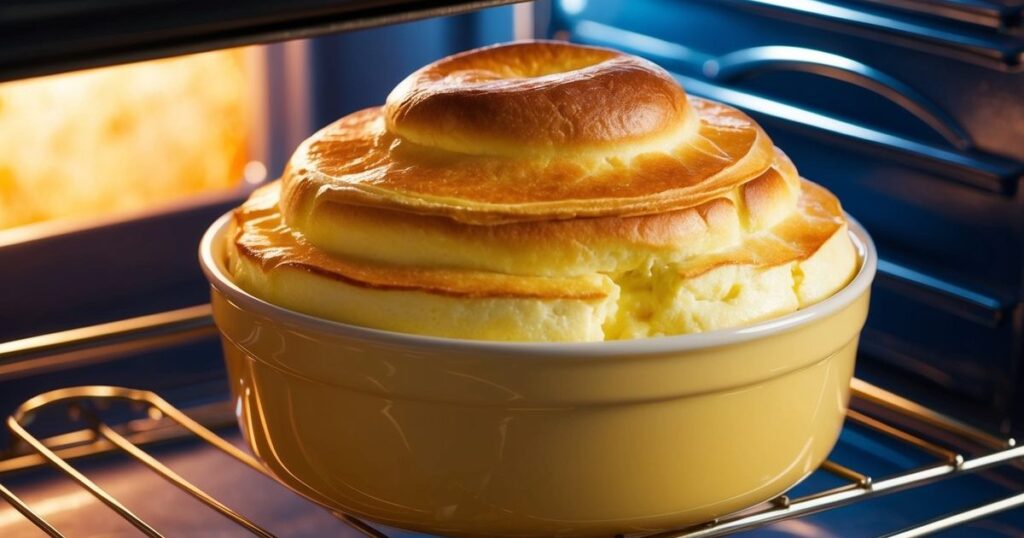
The word Soufflé is the past participle of the French verb souffler, meaning “to blow” or “to puff.” Originating in the early 18th century, it represents the refinement of French culinary logic: using air as a structural ingredient. A cheese soufflé relies on the expansion of air bubbles trapped in egg whites when subjected to the heat of the oven. While it has a reputation for being temperamental, a soufflé is actually quite sturdy if you understand the chemistry of the base and the stability of the foam.
Ingredients
The Structural Base (Béchamel):
- Butter: 45g (3 tbsp) unsalted butter + extra for coating the ramekin.
- Flour: 40g (approx. 3 tbsp) all-purpose flour.
- Milk: 250ml (1 cup) whole milk, warmed.
- Cheese: 120g finely grated Gruyère, Comté, or Emmental (Swiss-style cheeses melt best).
The Aeration:
- Eggs: 4 large eggs (separated into yolks and whites). Crucial: Eggs should be at room temperature.
- Stabilizer: A pinch of Cream of Tartar (optional) or a drop of lemon juice.
Seasoning:
- Spices: A pinch of Nutmeg (freshly grated), 1/2 tsp dry mustard (optional), salt, and white pepper.
- The Coating: 2 tbsp finely grated Parmesan cheese or breadcrumbs for the ramekin walls.
Detailed Instructions
Step 1: Preparing the “Launching Pad”
The most common reason a soufflé fails to rise is friction. Generously butter an 8-inch (1.5 quart) soufflé dish or several smaller ramekins using vertical strokes. Dust the buttered surface with Parmesan or breadcrumbs, tapping out the excess.
The Secret: The vertical butter strokes and the coating act like a ladder, allowing the batter to “climb” the walls easily.
Step 2: The Thick Base (Roux & Béchamel)
In a heavy saucepan, melt 45g of butter over medium heat. Whisk in the flour and cook for 2 minutes—do not let it brown. Gradually pour in the warm milk, whisking constantly until the mixture is thick, smooth, and begins to bubble. Remove from heat. Stir in the salt, pepper, nutmeg, and the grated Gruyère until the cheese is just melted.
Step 3: Tempering the Yolks
Let the cheese sauce cool for 5 minutes. Add the egg yolks one by one, whisking thoroughly after each addition. The base should be glossy and thick. If it’s too hot, the yolks will scramble; if it’s too cold, the cheese will seize.
Step 4: The Art of the Egg White (The Lift)
In a perfectly clean, grease-free bowl, beat the egg whites with a pinch of salt (and cream of tartar) until they form stiff peaks. Test: You should be able to turn the bowl upside down without the whites moving. However, do not overbeat until they look dry or “clumpy.”
Step 5: The Folding (The Most Delicate Step)
Add a large spoonful of the egg whites into the warm cheese base and stir it in vigorously. This “sacrificial” scoop lightens the base. Now, add the remaining whites. Using a rubber spatula, gently fold them in by cutting through the center, scraping the bottom, and turning the mixture over. Stop as soon as no large white streaks remain.
Warning: Do not stir! Stirring pops the air bubbles you worked so hard to create.
Step 6: The Bake
Pour the mixture into the prepared dish. Run your thumb around the inside rim of the dish to create a “moat” (this helps the soufflé rise straight up like a top hat). Place in a preheated oven at 190°C (375°F). Bake for 25–30 minutes. #### The Golden Rule: Do not open the oven door for the first 20 minutes. A rush of cold air can cause the delicate structure to collapse before it has set.
Serving Suggestions
A soufflé waits for no one! It will stay at its peak height for only 2 to 3 minutes before the cooling air inside causes it to deflate. Carry it to the table immediately. Serve with a crisp green salad tossed in a sharp Dijon vinaigrette to balance the rich, cheesy density.
Chef’s Tip
The “Gooey” Center: If you prefer a soufflé that is slightly “custard-like” in the middle, bake it for 2 minutes less than the recommended time. If you prefer it firm all the way through, let it go the full 30 minutes. Always look for a deep golden brown top—that’s where the most flavor lives!