
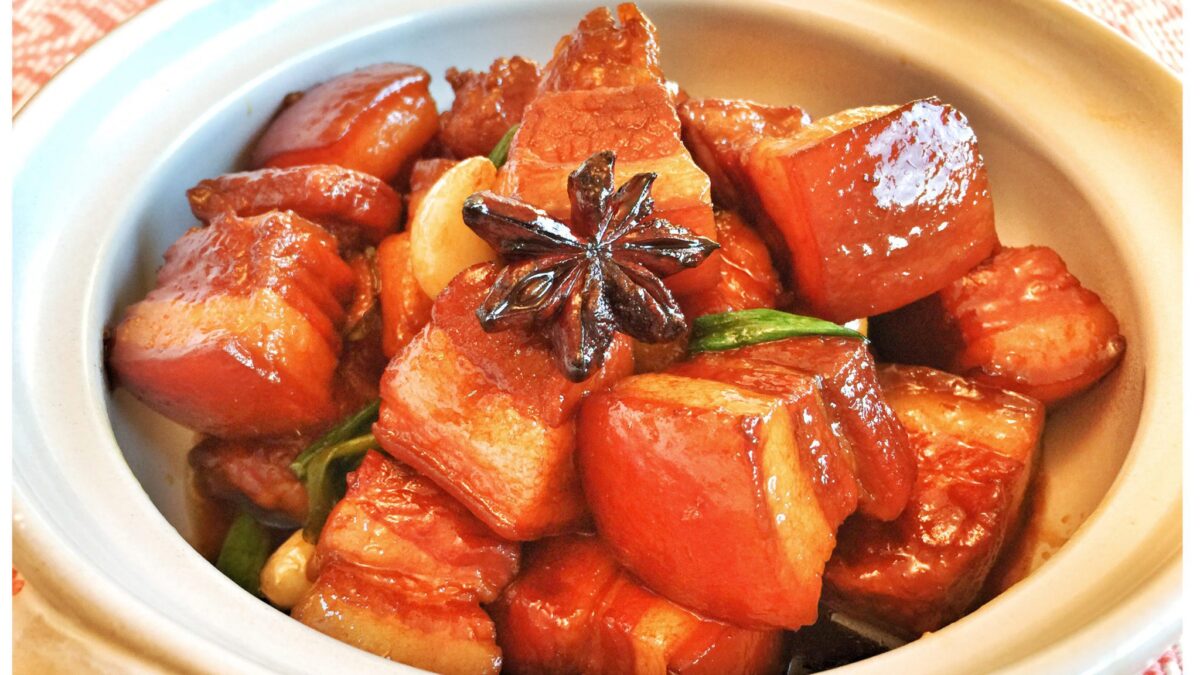
The Soul of the Dish: Why Ingredients Matter
In Red Braised Pork Belly, there is nowhere to hide. You cannot mask poor quality meat with spices.
- The Cut: You must seek out “Five-Layer Meat” (五花肉). This is the belly section where clear streaks of lean meat and fat alternate. If it’s too lean, the dish will be dry; if it’s too fatty, it will be cloying.
- The Sugar: While some modern recipes use dark soy sauce for color, the traditional mahogany glow comes from Rock Sugar. It provides a translucent, “jewel-like” sheen that granulated sugar cannot replicate.
- The Aromatics: You only need three—Star Anise, Cassia (Cinnamon), and Ginger. Over-spicing is the most common mistake; you want to enhance the pork, not overpower it.
Deep Dive: The Technical Process
I. The Blanching & The Cube
Start by cutting your pork belly into consistent 2.5cm cubes. Consistency ensures they all reach that “melting” point at the same time. Blanch them in cold water with a splash of Shaoxing wine and ginger slices. Bring to a boil, then skim the grey foam. Why cold water? Starting with cold water allows the impurities to be drawn out from the center of the meat as the temperature rises.
II. The “Chao Tang Se” (Sugar Coloring)
This is the step that separates the masters from the amateurs. In a clean wok, melt a small amount of oil and your rock sugar over low heat. Stir constantly. Watch the transformation:
- The sugar melts into a clear liquid.
- It turns pale yellow.
- It foams and turns a deep amber/mahogany. The Moment: Just as it begins to smoke and turn dark amber, toss in the pork. Coat every cube in this liquid caramel. This is how you get that deep, natural red without using artificial dyes.
III. The Flavor Infusion
Once the meat is glazed, add your ginger, star anise, and cinnamon. Pour in enough warm water to just cover the meat. Add light soy sauce for saltiness and a touch of dark soy sauce for depth.
- Crucial Note: Never add cold water to the hot seared meat. It will cause the proteins to seize, resulting in a tough texture.
IV. The “Patience” Phase (The Simmer)
Cover and lower the heat to the smallest flicker. You are not boiling the meat; you are gently coaxing the collagen to transform into gelatin. This usually takes 60 to 90 minutes. The meat is ready when a chopstick can pass through the fat layer with zero resistance.
V. “Shou Zhi” (The Great Reduction)
Remove the lid and turn the heat to high. This is where the magic happens. You must stand by the wok and stir. The thin braising liquid will reduce, thicken, and transform into a glossy, sticky glaze that clings to the pork like a velvet coat. This is not a “gravy”; it is a concentrated essence of pork and sugar.
The Verdict: How to Eat It
Red Braised Pork Belly is incomplete without a bowl of plain, fluffy white jasmine rice. The rice acts as a canvas for the rich, salty-sweet sauce. For a classic Shanghainese twist, you can add hard-boiled eggs or blanched bamboo shoots into the pot during the last 30 minutes of simmering—they will soak up the pork fat and become flavor bombs in their own right.
Chef’s Troubleshooting
- Too Greasy? If your pork belly is exceptionally fatty, you can pan-fry the cubes briefly before the sugar-coloring step to render out some of the lard.
- Sauce won’t thicken? You likely have too much water. Remove the meat and boil the liquid on its own until syrupy, then toss the meat back in to glaze.