
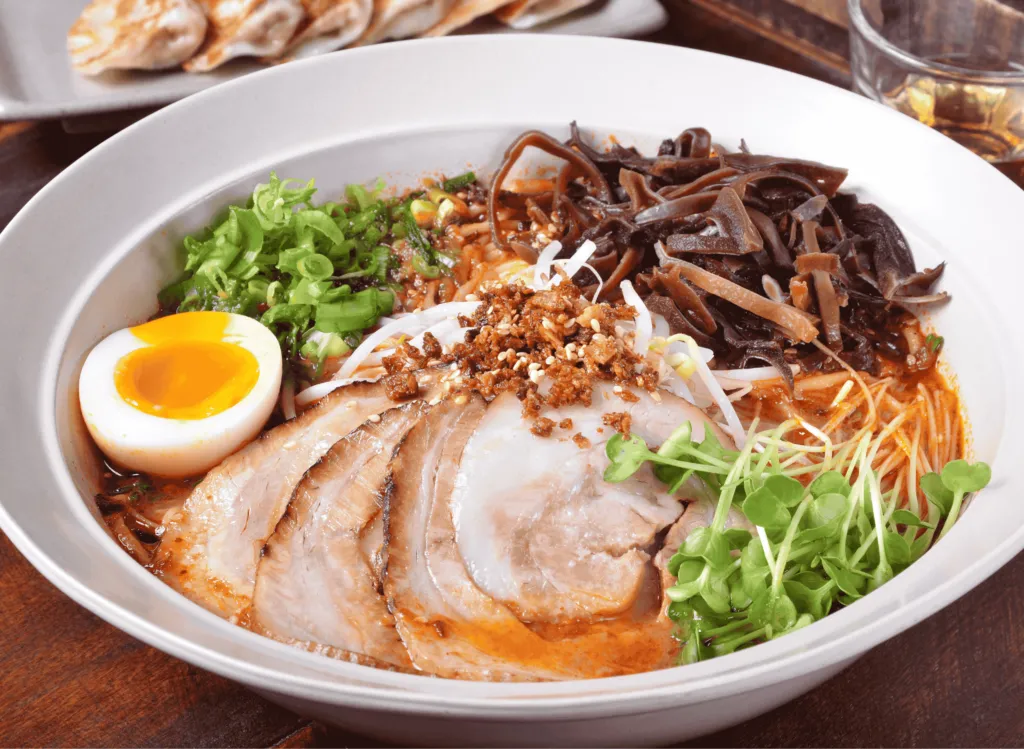
Tonkotsu (literally “pork bones”) Ramen originated in Kurume on the island of Kyushu. Unlike the clear Shoyu (soy) or Shio (salt) broths, Tonkotsu is an opaque, silky, and deeply savory soup. This texture isn’t achieved through dairy; rather, it is the result of boiling pork bones at a rolling boil for many hours, which breaks down collagen and marrow into a stable emulsion of fat and water. It is a labor of love that rewards the patient cook with a bowl of unparalleled depth.
Ingredients
The Broth (The Soul):
- Bones: 2kg Pork neck bones and femur bones (cut to expose marrow) + 500g pork trotters (for extra collagen).
- Aromatics: 1 head of garlic (halved), 1 large ginger knob (sliced), 2 leeks (white parts only), 1 onion (charred).
The Toppings & Seasoning:
- Chashu (Pork Belly): 1kg skinless pork belly (rolled and tied), braised in soy sauce, mirin, sake, and sugar.
- Tare (The Salt Base): A mixture of soy sauce, sea salt, and kombu dashi.
- Noodles: Thin, straight, high-alkaline wheat noodles.
- Garnish: Marinated soft-boiled eggs (Ajitsuke Tamago), wood ear mushrooms, green onions, and Nori (seaweed).
Detailed Instructions
Step 1: The “Blanch and Clean” (Critical Step)
Place all pork bones in a large pot and cover with cold water. Bring to a boil for 10–15 minutes. You will see a thick, grey foam (impurities) rise to the top. Drain the water and dump the bones into a clean sink.
The Secret: Scrub every bone under cold running water to remove any clotted blood or dark marrow bits. This is the only way to ensure your final broth is white and creamy rather than brown and muddy.
Step 2: The Long Boil
Return the cleaned bones to the pot. Add fresh water until the bones are covered by at least 5cm. Bring to a rolling boil. Unlike French stocks which must simmer gently, Tonkotsu requires the agitation of a hard boil to emulsify the fats.
- Duration: Boil for 10 to 12 hours. Keep a kettle of hot water nearby to top up the pot so the bones never become exposed.
- Final Hour: Add the charred onion, garlic, ginger, and leeks in the last 60 minutes of boiling to infuse aroma without turning the broth bitter.
Step 3: Preparing the Chashu (Pork Belly)
While the broth boils, sear your rolled pork belly in a pan until golden. Place it in a small pot with 1 cup soy sauce, 1/2 cup mirin, 1/2 cup sake, and 2 cups water. Simmer for 2 hours until tender. Let the pork cool in the liquid—this makes it easier to slice thinly. Save this liquid; it becomes part of your “Tare.”
Step 4: Straining the Liquid Gold
After 12 hours, the broth should be milky white and thick enough to coat a spoon. Strain through a fine-mesh sieve (or cheesecloth). Discard the bones. Using an immersion blender for 1 minute can further help emulsify the fat for a “latte-like” frothiness.
Step 5: The Tare (The Flavor Engine)
A broth without “Tare” is just unsalted pork tea. In a small bowl, mix:
- 3 tbsp of the Chashu braising liquid.
- 1 tsp sea salt.
- 1 tsp finely minced ginger. Combine this in the bottom of your serving bowl before adding the soup.
Step 6: Assembly
- Warm the Bowl: Rinse your ramen bowl with hot water so the soup stays hot.
- Tare First: Place 2–3 tbsp of Tare at the bottom.
- The Broth: Pour in 350ml of the boiling Tonkotsu broth and whisk to combine with the Tare.
- The Noodles: Boil your alkaline noodles (usually only 60–90 seconds). Drain well and fold them into the broth.
- The Art: Arrange slices of Chashu, a halved marinated egg, sliced scallions, and a sheet of Nori on top.
Serving Suggestions
Serve immediately! Ramen is meant to be eaten fast—within 5 to 7 minutes—before the noodles absorb too much soup and lose their “bite.” It is culturally encouraged to slurp the noodles; this draws air into the mouth, cooling the noodles and enhancing the aroma of the broth.
Chef’s Tip
To get the most “creamy” mouthfeel, ensure you use pork trotters. They are packed with natural gelatin. If your broth doesn’t turn white, it’s likely because the heat was too low. The bubbles must be active and “violent” to break the fat globules into the water.